THE ROASTED TEA EDIT
Hojicha latte. Toasty tea, your way.
Make it warm and frothy or cold over ice. One roasted-tea base, two ways to pour.
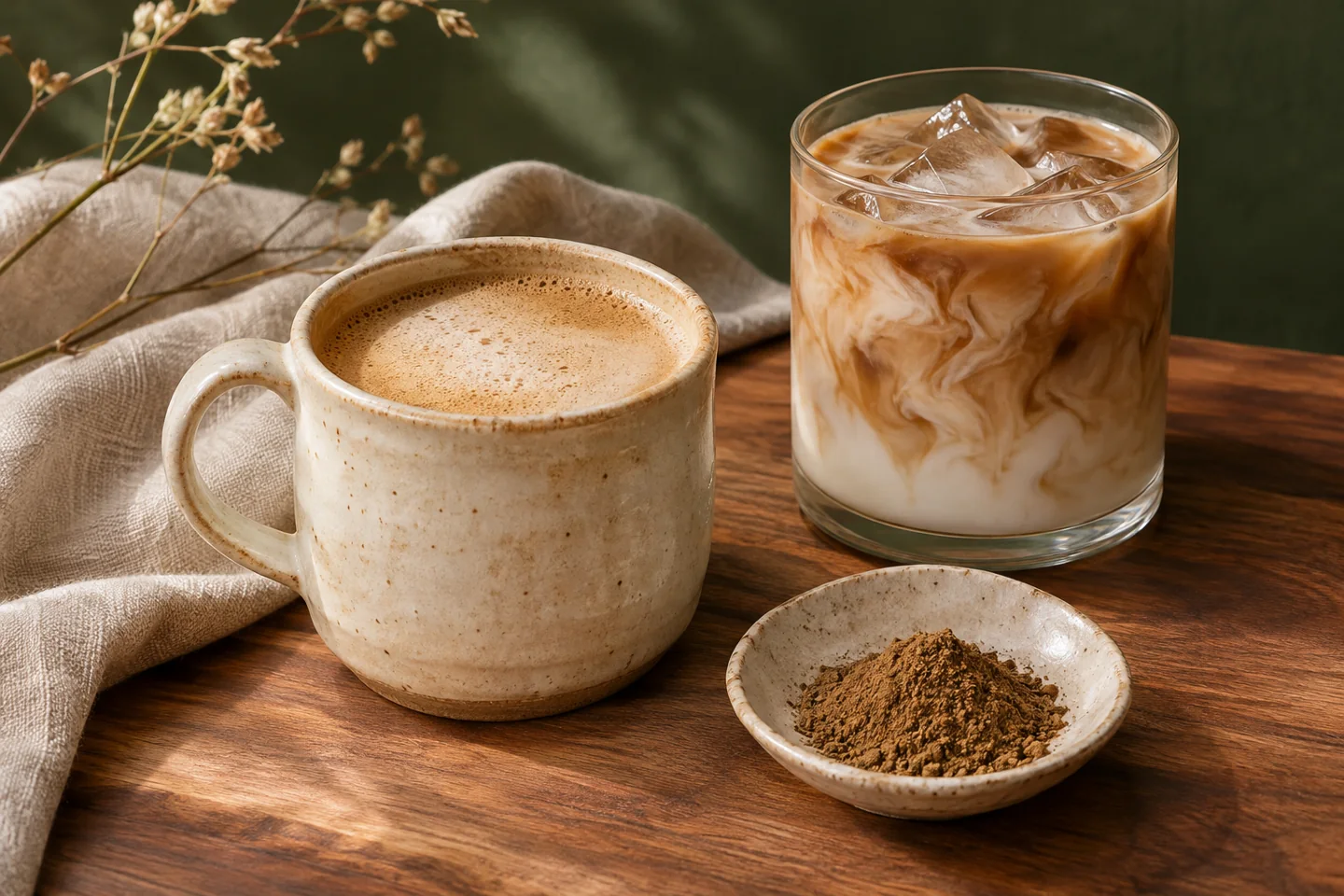
A hojicha latte is Japanese roasted green tea mixed with milk. For a simple powder version, whisk 1 teaspoon of hojicha with 60 mL warm water, then add 180 mL milk. Serve warm or over ice. Hojicha tastes roasted and mellow; it contains caffeine and is different from matcha.
If you enjoy our iced matcha latte but want a change from grassy green tea flavors, this is a useful next recipe. Start with the plain drink so you can taste the roast before adding syrups.
Disclosure: This post contains affiliate links. As an Amazon Associate I earn from qualifying purchases.
What is hojicha—and what does a hojicha latte taste like?
Hojicha is roasted Japanese green tea, sold as loose leaves, stems, or a fine brown powder. It can taste toasty, woody, nutty, or cocoa-like, depending on the tea and roast. Milk softens those flavors into a creamy latte; chocolate and coffee are not required ingredients.
Hojicha is sometimes called “roasted matcha,” but that shortcut is misleading. Matcha and hojicha are distinct tea products. Hojicha’s green tea can be steamed during processing and then roasted later—it is not simply roasted instead of steamed. Hojicha Co.’s powder details describe that sequence.
Hojicha latte recipe: hot or iced
Yield: 1 latte · Prep: about 5 minutes, plus cooling if needed · Base ratio: 1 part water to 3 parts milk.
The tea, water, and milk amounts are adapted from Hojicha Co.’s latte method. Use your powder’s label as the starting point if its recommended serving differs.
Ingredients
- 1 teaspoon pure, unsweetened hojicha powder (about 1.5 g for Hojicha Co. Original; other brands vary)
- 60 mL warm water at 80°C / 176°F (about ¼ US cup)
- 180 mL milk or oat milk (about ¾ US cup)
- Optional: 1 teaspoon maple syrup
- For iced: about 100 g ice, or enough to fill your glass halfway
How to make it
- Whisk the tea base. Sift the hojicha powder into a heat-safe bowl or mug. Add the warm water and whisk until evenly mixed, with no dry clumps. Stir in maple syrup if using.
- Choose hot or iced. For a hot latte, gently heat the milk until steaming, without boiling, and froth if desired. For an iced latte, use cold milk and let the tea base cool until just warm.
- Assemble the latte. Hot: pour the warm milk into the tea base. Iced: add ice to a 12–16 oz glass, pour in the cold milk, then add the tea base.
- Stir and adjust. Stir before drinking. Taste before adding more sweetener. Serve immediately; tea particles can settle, so stir again as needed.
Milliliters are the reference measurements; cup measures are rounded. A teaspoon of powder is not a universal gram weight, so use the label or a small scale when you want repeatable results.
Which hojicha powder should you buy?
Look for finely ground, unsweetened hojicha with roasted green tea as the only ingredient. Powder mixes directly into the drink; loose leaves need steeping and straining. An instant latte mix may already contain sugar or milk powder, so it will not behave like pure tea in this recipe.
Browse unsweetened hojicha powder on Amazon. Compare the ingredient list, package size, seller, and storage instructions before ordering. These are search results, not a claim that every listing meets those criteria.
Choose a small pack for your first purchase. A stronger roast may suit a milk-heavy drink, while a lighter roast can be more subtle. Store the powder sealed, dry, and away from heat and light; follow the maker’s after-opening guidance.
Milk and tools: keep the setup simple
Oat milk: a creamy starting point that complements the toasted flavor. Dairy milk: a familiar, rounded latte texture. Soy milk: another option when you want body. Start with unsweetened milk if you want control over sweetness; “barista” formulas and sweetened cartons can change both texture and flavor.
Our milk guide explains the texture trade-offs for tea lattes. You do not need a new kit if you already make matcha: a small bowl and whisk or handheld frother will do. See whisk versus frother for the practical differences.
- Compare barista oat milk on Amazon — check carton size and added sugar.
- Browse handheld milk frothers on Amazon — useful for mixing the tea base or foaming milk.
- OXO mini strainer on Amazon — an existing tool pick from our iced latte guide, useful for breaking up powder clumps.
Hojicha latte vs. matcha latte
| Question | Hojicha latte | Matcha latte |
|---|---|---|
| Which tea? | Roasted Japanese green tea; powder or a strained infusion | Finely ground matcha powder |
| Typical color? | Tan to roasted brown with milk | Green with milk |
| Flavor direction? | Toasty, woody, sometimes nutty or cocoa-like | Grassy, vegetal, and umami |
| Contains caffeine? | Yes; amount depends on the product and serving | Yes; amount depends on the product and serving |
| Hot or iced? | Both | Both |
Neither drink needs espresso. “Latte” here describes the milk-based preparation. Choose by flavor, then check the actual tea’s caffeine information if that affects your choice.
How much caffeine is in a hojicha latte?
There is no single caffeine number for every hojicha latte. The tea material, brand, quantity, and preparation all matter. A powdered drink contains the ground tea, while a leaf infusion is strained; do not apply a brewed-tea caffeine figure to every powder latte.
Ippodo describes its bancha teas, including hojicha, as lower in caffeine, but that does not make this recipe caffeine-free. Use the manufacturer’s information for your powder and serving size. Avoid treating “low caffeine” as a guarantee that a drink will not affect sleep.
Can you make a hojicha latte with tea leaves?
Yes. Brew a concentrated hojicha infusion, strain the leaves, then add milk to taste. Follow the tea maker’s brewing temperature and timing: loose-leaf instructions can differ from powder instructions. Start with less milk than in the powder recipe and increase gradually so you do not hide the tea.
Do not swap a teaspoon of leaves for a teaspoon of powder: their weights and extraction differ. Loose leaves also should not be whisked straight into the finished latte.
Fix a weak, gritty, or overly sweet latte
- Too mild? Increase the powder a little on the next cup while keeping the liquid measurements steady. Alternatively, reduce the milk.
- Clumpy? Sift first and mix the powder with warm water before adding milk. Whisk around the bottom of the bowl.
- Settling at the bottom? Some settling is normal with ground tea. Stir again before the last few sips.
- Too sweet? Skip the syrup and check whether your milk or powder mix is already sweetened.
- Watery over ice? Cool the tea base first, use cold milk, and serve promptly so the ice does not dilute it as quickly.
Three easy flavor variations
Vanilla: add a few drops of vanilla extract to the finished drink. Maple: use the optional teaspoon of maple syrup, then taste. Strawberry: start with 1 tablespoon of our strawberry syrup in the glass and omit the maple syrup; the fruit will make a sweeter variation.
Hojicha latte FAQs
Is hojicha latte coffee?
No. The basic drink contains roasted green tea and milk. It contains no coffee unless you add espresso.
Is hojicha latte sweet?
Pure hojicha is unsweetened. Milk can give the drink a sweet impression, and café recipes may include syrup. Making it at home lets you leave sweetener out.
Can I make it vegan?
Yes. Use a plant-based milk and, if desired, maple syrup. Check flavored powders and instant mixes for dairy ingredients.
Do I need a bamboo whisk?
No. A handheld frother or small whisk can mix the powder and water. A spoon also works, but take time to smooth out clumps before adding milk.
Why is hojicha brown if it is green tea?
“Green tea” describes the tea category, not the final drink color. Roasting changes hojicha’s appearance and aroma; milk makes the finished latte lighter.
More tea lattes to make next
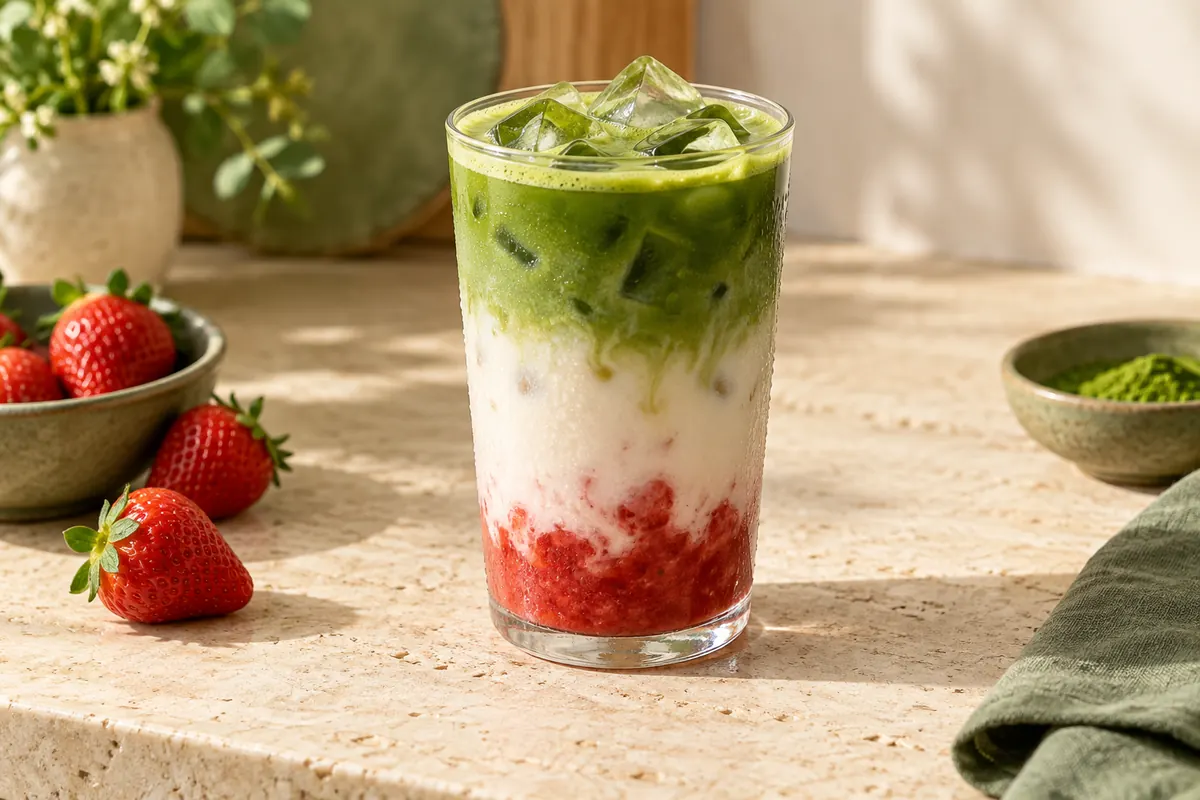
Try our hot matcha latte for a green-tea contrast, the vanilla matcha latte for a simple flavored drink, or the strawberry matcha latte for a fruity iced version.