MATCHA GUIDES
Why Does Matcha Taste Bitter? 5 Mistakes to Check
A bitter or clumpy latte needs a specific check. Compare five common preparation mistakes, adjust one variable at a time and choose tools around the problem you actually have.
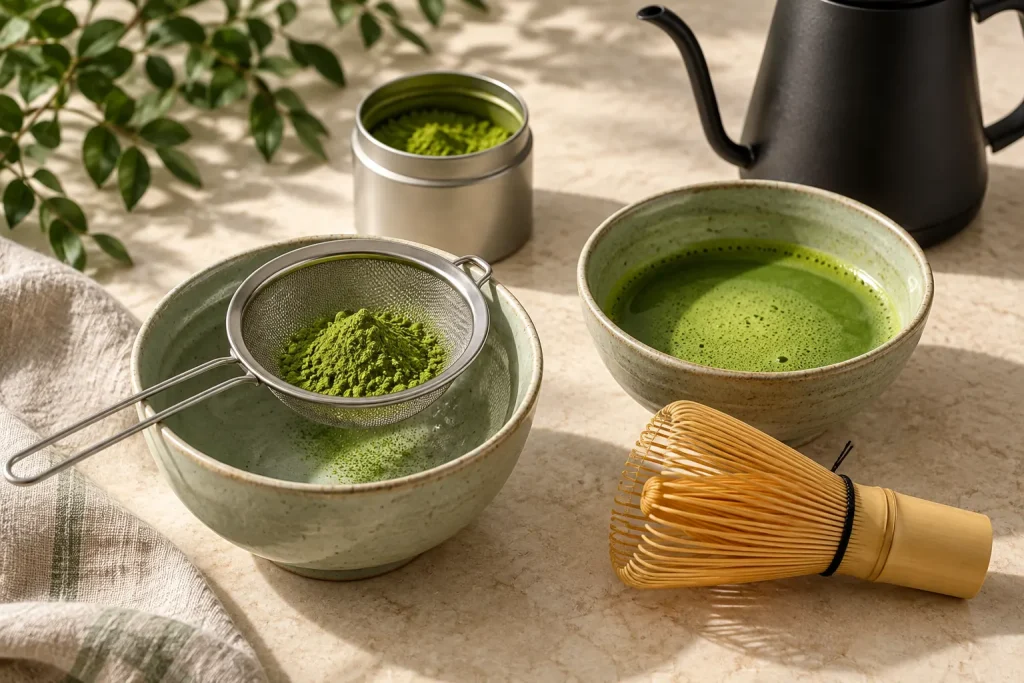
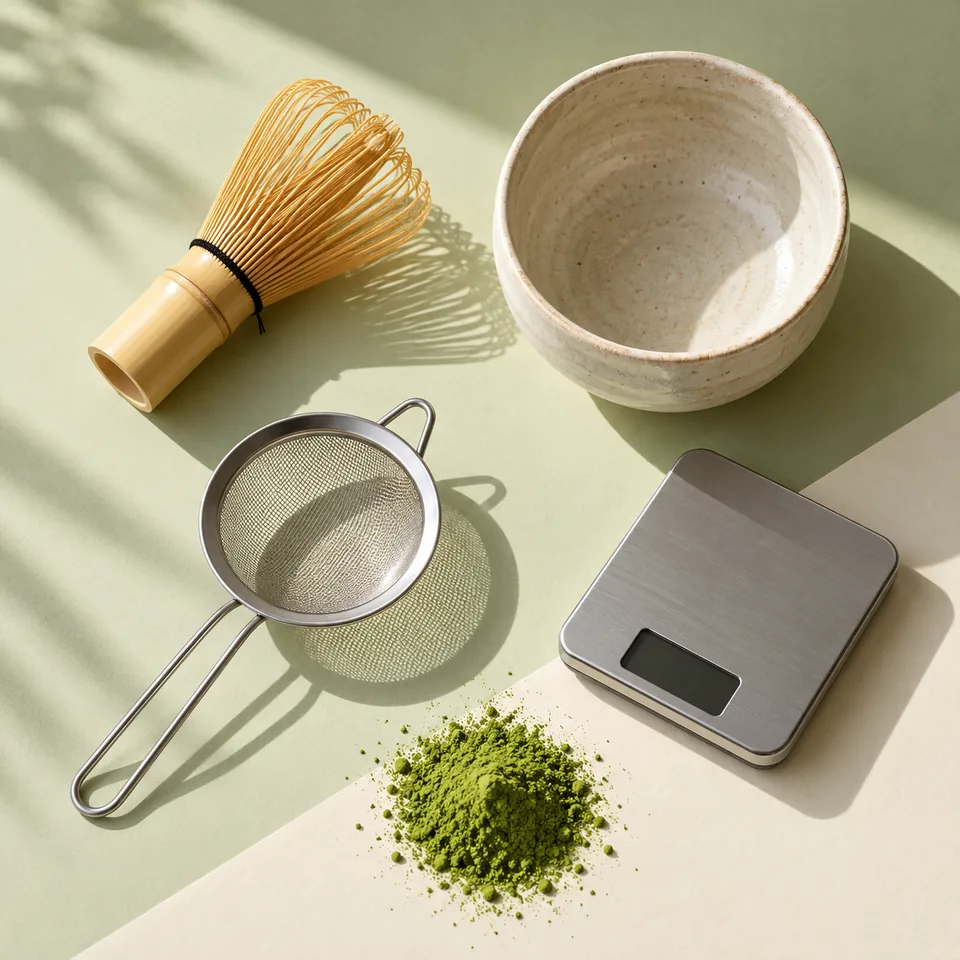
Editorial illustration: matcha preparation tools and powder.
Drinks / Recipes / Cocktails & Mocktails / Gear / Learn
Why does matcha taste bitter?
Matcha can taste stronger than you want because of the powder portion, preparation temperature, drink balance or the powder itself. Clumps are a separate texture problem. Start by weighing the tea, following its maker’s temperature guidance and mixing it with water before adding milk.
A little bitterness or a drying finish does not automatically mean something went wrong. Ippodo describes bitterness and astringency as part of Japanese tea’s character. The useful question is whether the drink suits your taste—and which single change improves it.
Quick diagnosis / 5 mistakes / Compare fairly / Amazon prep picks / Questions
Find the first thing to check
| What you notice | Check first | Try in your next drink |
|---|---|---|
| Very strong throughout | Powder-to-liquid balance | A smaller weighed tea portion |
| Sharper than your usual cup | Water temperature | The maker’s recommended temperature |
| Dry pockets or lumps | Sifting and mixing | Prepare the tea separately in water |
| Sweet, heavy or tea disappears | Milk and syrup | Change just one milk or sweetener choice |
| Less fragrant than before | Storage and opening date | Review the pack’s storage directions |
On small screens, swipe the table sideways to compare every column.
These checks suggest a starting point; similar symptoms can have different causes.
5 matcha mistakes—and what to change
1. Guessing the powder portion
A heaped spoon is hard to repeat. Too much matcha for your preferred amount of liquid can make a latte feel overpowering even when the powder is appropriate for milk-based drinks.
- Notice: the whole drink tastes stronger than you want, without obvious dry clumps.
- Check: weigh the tea and measure both water and milk.
- Change: use a smaller weighed powder portion in the next serving while keeping the liquids fixed.
Our banana-milk matcha latte uses 3 g tea, 60 mL water and 180 mL milk. Those amounts belong to that recipe.
2. Using a water temperature that does not suit the powder
Temperature is worth checking when the same tea tastes unexpectedly sharp. Use the blend’s instructions rather than assuming straight-from-the-kettle water is the right choice.
- Notice: a repeat drink tastes harsher despite the same measured ingredients.
- Check: compare your actual water temperature with the pack’s guidance.
- Change: adjust temperature alone; keep powder and liquid amounts unchanged.
For a published reference, Ippodo’s iced latte uses water at 80°C / 176°F, with 3 g matcha, 100 mL water and 100 mL milk. This maker’s recipe differs from our fruit latte. Temperature alone cannot guarantee your preferred flavor.
3. Putting dry powder straight into the finished latte
Dry powder pockets are a mixing issue. Ippodo notes that clumps naturally form in matcha and that sifting helps break them up. A clump alone does not establish that a powder is defective.
- Notice: small dry lumps or concentrated powder at the bottom.
- Check: sift into a separate bowl before adding the measured water. Our matcha sifter guide compares suitable tools and shows the preparation steps.
- Change: whisk until visible dry pockets disperse, then add the prepared tea to milk.
Use a bowl with room for a bamboo whisk, or a suitable deeper cup for a maker-approved frother. The whisk-versus-frother guide explains the two workflows.
4. Changing milk, syrup and tea at the same time
A new vanilla milk, more syrup and extra tea create three changes at once. You may like the result, but it will be difficult to tell what helped.
- Notice: the latte is too sweet, too heavy or loses the tea behind other flavors.
- Check: read the particular milk’s sweetness and flavor labels.
- Change: compare one milk with your usual milk, keeping tea, water and milk quantities equal. Taste before adding syrup.
More milk changes strength and body; syrup changes sweetness. Compare those choices separately using the milk-for-matcha guide.
5. Ignoring storage and how quickly you use the pack
If a familiar powder seems less fragrant, review how it has been stored before buying a different grade. Storage history is useful context, but flavor alone cannot tell you the powder’s age or condition.
- Notice: a change from your earlier drinks made with the same powder.
- Check: the opening date, package directions and whether the container stays tightly closed.
- Change: follow the maker’s storage instructions and choose a pack size that fits your use.
Ippodo’s storage guide recommends an opaque, tightly sealed container away from heat, direct sun and strong odors. Other makers’ instructions may differ; there is no single after-opening timeline to apply to every powder.
Make one change you can judge
- Record your starting drink: powder grams, water amount and temperature, milk amount and any syrup.
- Pick one symptom: too strong, clumpy, too sweet or less fragrant.
- Change one variable: avoid buying a new powder and changing the recipe together.
- Repeat the preparation: use the same vessel and mixing method, then note which version you prefer.
If technique and portions are consistent but the flavor still does not suit you, compare another powder marketed for your drink. Our matcha-for-lattes buying guide helps you look beyond the front-label grade.
3 optional matcha prep picks
Start with the equipment you own. These ingredient and preparation options address different jobs; none promises to remove every bitter note.
As an Amazon Associate I earn from qualifying purchases.
Naoki Superior Blend · 40 g
A pure, unsweetened matcha marketed for tea and lattes. The smaller pack offers a manageable first comparison. Follow its own preparation and storage directions.
See Naoki matcha on AmazonOXO Good Grips 3-inch Mini Strainer
A small fine-mesh strainer for sifting powder into a bowl. Check the fit over your vessel and dry the mesh after cleaning.
See the OXO mini strainer on AmazonJade Leaf bamboo whisk and scoop
A manual option for the tea-and-water step. Follow the maker’s care directions. The scoop transfers powder; it does not guarantee a gram measurement.
See the Jade Leaf whisk set on Amazon
Manufacturer details: Naoki powder · OXO strainer · Jade Leaf whisk. Check the Amazon listing for current availability and the selected model or pack.
Bitter and clumpy matcha questions
Should matcha have no bitterness at all?
No. Some bitterness and astringency are part of tea’s character. The useful goal is a flavor you enjoy, with a preparation and portion you can repeat.
Will ceremonial-grade matcha fix a bitter latte?
A grade word cannot guarantee your preferred flavor. Ippodo does not use that marketing term. Compare the actual powder’s intended preparation, ingredients and flavor description alongside your recipe.
Why is matcha clumpy even when it is new?
Clumps can naturally develop in the powder. Sift before mixing and whisk with water separately. New packaging does not remove the need for that preparation step.
Should every matcha powder go in the refrigerator?
Follow the particular maker’s directions. Ippodo’s cited guide recommends a tightly sealed, opaque container in a cupboard away from heat and strong odors. Apply your own pack’s storage instructions rather than treating one method as universal.
Can I fix the flavor just by adding more syrup?
Syrup changes sweetness, which may suit your preference, but it does not disperse dry clumps or tell you whether the tea portion was too large. Check the specific problem first.
For a preparation refresher, visit the matcha basics collection, then return to a measured drink you enjoy.
Two useful checks for the next cup
Compare your measured tea base with the matcha-to-water ratio chart before changing several ingredients at once. If freshness is your concern, check the package against the maker-specific matcha storage guide.
More Amazon tools for repeatable preparation
The powder, sieve and whisk above cover a basic manual routine. Add a scale or holder when it solves the particular problem you have identified.
As an Amazon Associate I earn from qualifying purchases. These are affiliate links. Check the selected pack, bundle and current listing details before ordering.
OXO Precision Scale with Timer
Use weighed portions for a comparison that keeps powder amounts consistent. The maker specifies 0.1 g intervals from 0.5 g.
View on AmazonJade Leaf porcelain whisk holder
A holder option for drying a compatible whisk without forcing its shape. Follow the whisk maker’s care guidance.
View on Amazon
Keep exploring matcha
- Clean your whisk — Work through the rinse-and-dry routine.
- Compare starter kits — Replace missing pieces with a suitable bundle.
- Iced latte reference recipe — Keep quantities fixed while checking your technique.
- Matcha lemonade — Try a measured recipe with a different flavor balance.
KEEP EXPLORING