MATCHA GUIDES
What to Mix MSM Powder With: Matcha, Tea & More
Wondering what to mix MSM powder with? Compare the drink directions on real products, decode matcha-flavored supplements and latte blends, then explore a separate vanilla-coconut iced matcha recipe.
By Anton Babich · Updated
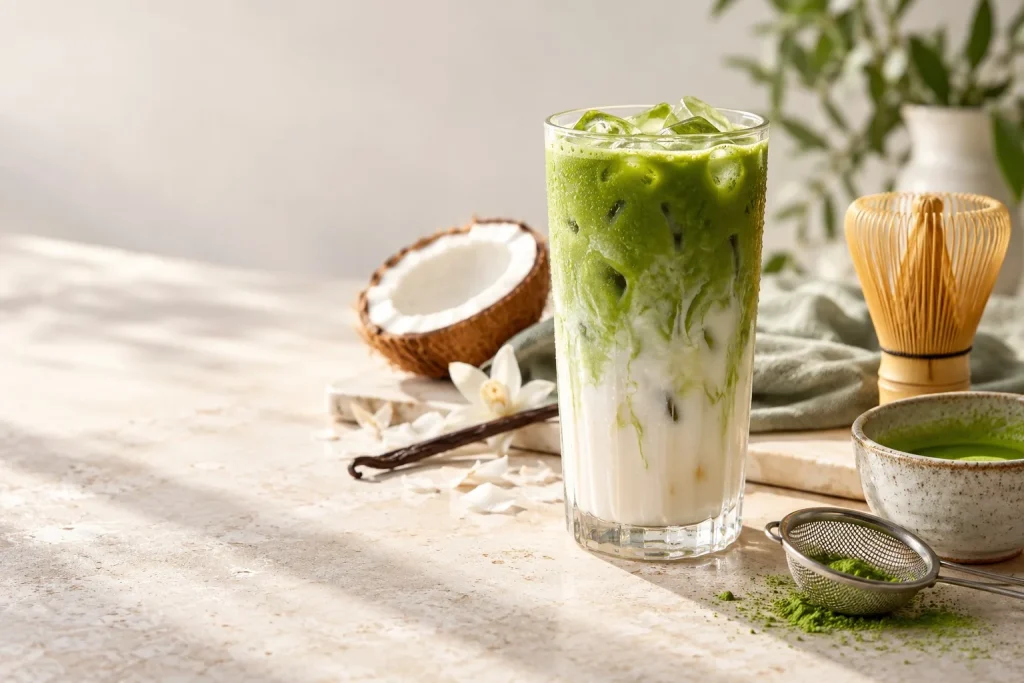
Illustration ofthe supplement-free vanilla coconut matcha.
What is MSM? / Potential benefits / Mixing answer / 4 powder types / Drink comparison / 5 questions / Side effects + safety / Coconut recipe idea / Recipe essentials / 12 FAQs
What can you mix MSM powder with?
Some MSM products name juice or another liquid in their directions. Start with the ingredients, directions and warnings on your exact package. For example, NOW’s MSM powder names juice or other liquid, while a ready-made supplement latte can have different instructions.
MSM means methylsulfonylmethane, a compound sold as a dietary supplement. Matcha is ground tea. A product combining the two, or using matcha flavoring, needs its own label check.
- For the supplement question: compare the exact product and its directions in the guide below.
- For the matcha drink: jump to the vanilla-coconut iced latte, made without MSM.
- For personal use: ask a clinician or pharmacist about your medicines, health history and the product.
Understand the ingredient
What is MSM?
MSM stands for methylsulfonylmethane, a sulfur-containing compound sold as a dietary supplement. You may also see it called dimethyl sulfone or “organic sulfur.” It occurs naturally in small amounts in foods, including some fruits, vegetables, grains and milk. In supplement form, it is sold as powder, crystals, capsules and combination products.
People commonly shop for MSM for joint comfort, exercise recovery and skin, hair or nail appearance. Those are areas of research and marketing, rather than a list of benefits every person can expect. The amount, formulation, study population and outcome measured all affect what a result can tell us.
What does the sulfur in MSM do?
Sulfur is part of normal human biology, including sulfur-containing amino acids used to build proteins. That connection helps explain the interest in MSM and connective tissues. It does not show that everyone needs an MSM supplement or that taking more sulfur will automatically build collagen, repair cartilage or grow hair.
Researchers have investigated MSM’s effects on inflammatory and oxidative-stress pathways. Laboratory findings can help explain a possible mechanism, but benefits in people need human trials. Even a change in a laboratory marker does not automatically mean better symptoms or long-term health.
Is MSM a type of matcha or collagen?
No. MSM is a separate compound. Matcha is ground tea, and collagen is a protein. A matcha-flavored MSM product or a collagen-and-MSM blend combines different ingredients; its name alone does not tell you the amounts or establish a benefit.
Background and study context: Withee and colleagues’ MSM exercise trial and the 2023 MSM knee trial. “Organic sulfur” describes a carbon-containing sulfur compound; it is not, by itself, an organic-certification claim.
Potential benefits · Evidence and limits
What are the potential benefits of MSM?
Some human studies have reported improvements in joint symptoms or skin appearance, while other results have been mixed or inconclusive. The useful question is which benefit was measured, in whom, and against what comparison. Here are four areas worth understanding.
01 / Joint comfort
Knee discomfort and function
A 12-week randomized trial in 88 adults with mild knee discomfort found an improvement in its primary knee questionnaire with MSM compared with placebo. Not every measure improved, and the study was industry-supported.
The findings suggest a possible benefit for that particular population. They do not prove cartilage repair, arthritis prevention or the same effect in everyone. A trial in 180 military trainees found no significant knee- or mood-score advantage over eight weeks.
02 / Exercise recovery
Post-exercise soreness
MSM has been studied for muscle soreness and recovery. A small placebo-controlled half-marathon trial reported a pain-reduction signal, but the treatment effects did not reach statistical significance. It did not establish reduced oxidative stress or muscle damage.
That leaves recovery benefits uncertain. A promising direction in a small trial is a reason for further research, rather than proof of faster recovery or improved athletic performance.
03 / Skin appearance
Wrinkles, texture and hydration
A two-part skin study, first published online in 2020, reported improvements in facial wrinkles and roughness in a 20-person placebo-controlled phase. A second phase followed 63 people taking two different MSM amounts and reported improvements from baseline in several skin measurements, including hydration and elasticity.
This is preliminary evidence. The second phase compared active amounts rather than MSM with placebo, and one author was affiliated with the ingredient supplier. Larger independent trials would help clarify the size and reliability of any benefit.
04 / Hair and nails
Condition and appearance
A 2019 exploratory study of 63 women reported improvements in assessed hair and nail condition over four months. Participants received one of two MSM amounts, rather than being compared with a placebo group.
The study offers an early signal about appearance and condition. It does not establish MSM as a treatment for hair loss, prove hair regrowth or guarantee stronger nails.
How strong is the evidence overall?
The evidence differs by use, and several studies are small, short or connected with ingredient suppliers. Findings from a multi-ingredient product also cannot isolate MSM’s contribution. The NCCIH consumer overview, last updated in September 2017, describes insufficient evidence to draw conclusions about MSM for osteoarthritis; it is an older summary, rather than a complete review of later research.
None of the trials described here tested MSM mixed into matcha. They do not show that tea improves its benefits or absorption. This section explains potential benefits under investigation, rather than recommending that you start a supplement or choose a dose.
Before deciding whether to use MSM, read the side effects and safety section and discuss the specific product with a clinician or pharmacist.
Can you add MSM to matcha?
Whether a particular MSM product can be mixed into matcha depends on its directions. That does not tell us whether you should take it, or whether the combination adds a health benefit. The research linked below did not test a homemade MSM-matcha drink. Do not assume the tea improves absorption, makes MSM safer or turns the latte into a proven skin or hair treatment.
MSM stands for methylsulfonylmethane, a sulfur-containing compound sold as a supplement. Matcha is powdered green tea. If an MSM trend brought you here, evaluate the supplement separately from the drink: check the exact label, then ask a clinician or pharmacist about personal suitability.
For the flavor alone, the vanilla coconut matcha idea below uses ordinary food ingredients and contains no MSM.
Before choosing a drink, identify the powder
What should you mix MSM powder with? Start with the directions on your exact product. Some manufacturers name juice or another liquid; a ready-made latte blend can have different instructions. A drink suggestion is not evidence of extra health benefits.
The word “matcha” can appear on very different packages. These four formats are worth separating before you reach for a whisk.
01 / Tea
Plain matcha powder
Matcha is ground tea. For a plain matcha recipe, look for tea on the ingredient list and check whether sugar, milk powder or flavoring has also been added. A sweetened latte mix is a different starting ingredient.
02 / Supplement
Pure MSM powder
NOW’s US MSM powder lists no other ingredients. Its directions name juice or another liquid. That does not make MSM tea, nor does it establish a specifically evaluated matcha method.
03 / Flavored supplement
Matcha-flavored MSM
Kala Health’s matcha version combines MSM with matcha-tea flavoring and ingredients including maltodextrin, acacia gum and sweetener. A flavoring description is not a stated quantity of ground tea.
04 / Multiactive blend
A “matcha hair latte” mix
Golden Tree’s product lists matcha, MSM, biotin, zinc, cinnamon extract and coconut-milk powder. Its preparation instructions belong to that complete formula; they are not a recipe for combining separate supplements.
The Kala and Golden Tree pages are European storefront examples, included to explain labels. They are not US availability checks or supplement recommendations. Product names and marketing do not establish benefits for a homemade drink.
Water, juice, smoothies or matcha: what the sources actually say
Use this comparison to distinguish a named direction from a plausible-sounding addition. The source column matters: a manufacturer’s recipe, an ingredient’s technical information and your own package directions answer different questions.
On a small screen, swipe the table sideways to read every column.
| Drink format | Source-backed information | What that leaves open |
|---|---|---|
| Water | Bergstrom’s ingredient FAQ describes OptiMSM dissolving in room-temperature water, depending on the liquid and amount. | Solubility does not establish a personal serving, taste ranking or suitable preparation for every blend. |
| Juice | NOW’s product directions explicitly name juice or another liquid. | The wording does not promise better absorption from citrus or require a vitamin C drink. |
| Smoothies | Sunfood publishes a smoothie containing its Opti-MSM flakes. | A branded recipe is an example for that product, not a transferable supplement serving or proof that fruit conceals its taste. |
| Plain matcha, tea or coffee | NOW’s reviewed directions use the broad category “other liquid”; they do not specifically name these drinks. | That wording does not settle every tea, milk, caffeine or temperature question. Ask the product maker about instructions that remain unclear. |
| A ready-made matcha latte supplement | Golden Tree names water, milk or a plant-based drink for its blend. | Those formula-specific directions do not validate an improvised version made with pure MSM and matcha. |
5 practical questions before mixing MSM into a drink
1. How do you take MSM powder according to its label?
Read the ingredient list, directions and warnings together. Confirm whether you have pure powder, a combination supplement or a flavored drink mix. Do not swap another product’s scoop into the instructions: measures and formulas can differ. A food recipe should not decide your supplement amount.
2. Are bitterness and undissolved powder the same problem?
No. Taste and mixing behavior are separate questions. A powder being water-soluble does not mean it is flavorless. The sweetener in a flavored supplement also makes it different from a pure powder. Check flavorings and sweeteners before transferring a preparation idea from one product to another.
Matcha adds another distinction: ground tea does not fully dissolve like sugar. Matcha.com explains its settling behavior, while Ippodo recommends sifting to break up clumps. A little tea sediment does not identify which other ingredient dissolved.
3. Is hot or cold better for MSM?
The sources reviewed do not establish one best temperature for an MSM-matcha drink. Balchem describes its OptiMSM ingredient as water-soluble and stable at high temperatures. That broad formulation statement supplies neither a home preparation temperature nor a stability guarantee for added vitamins and other ingredients. Follow the finished product’s directions rather than a universal heat rule.
4. Do I need vitamin C or orange juice?
Do not assume vitamin C is required because a product combines the two. NOW’s reviewed pure-MSM directions do not state that requirement. The sources reviewed here do not establish that adding vitamin C to a matcha latte improves MSM absorption. Choose a fruit-and-matcha recipe for its flavor, without treating citrus as a supplement “activator.”
5. Is “matcha hair latte” a type of matcha?
It is product language, not a tea grade. Check the complete ingredient list rather than inferring a formula or result from the name. A seller’s hair-related claims do not establish that adding MSM to ordinary matcha produces the same outcome. For the drink itself, continue to the separate vanilla-coconut iced matcha recipe, which contains no MSM.
Can you put MSM powder in coffee, tea or matcha?
Check the finished product’s directions before choosing one of these drinks. The pure-MSM label reviewed above does not specifically name coffee, tea or matcha. A premixed matcha supplement has its own formula and directions, which do not transfer to separate powders.
If the instructions leave your drink choice unclear, ask the manufacturer. Questions about medicines, medical conditions or whether the supplement suits you belong with a clinician or pharmacist. Preparing a normal latte is a separate food choice: the coconut recipe below contains no MSM.
MSM side effects and safety: who should check first?
Ask a qualified healthcare professional about your circumstances, especially if you take medicines, have a medical condition, are pregnant or breastfeeding, or are considering a supplement for a child. NCCIH’s supplement guide explains these considerations.
NCCIH’s September 2017 MSM overview describes uncertain safety and possible allergic reactions, digestive upset and skin rashes; it is not a complete review of newer studies. The FDA does not approve dietary supplements for safety and effectiveness before sale. Shopping-site availability and ratings do not establish medical suitability.
One iced latte · Coconut + vanilla · No MSM
Vanilla coconut iced matcha: a supplement-free recipe idea
Make the drink for its matcha, coconut and vanilla flavors. This food-only recipe uses an unsweetened coconut milk beverage from a drinking carton, with maple syrup optional. It contains no MSM or other added supplement.
Recipe development note: This combination has not been kitchen-tested by MatchaMixology. Treat the quantities as a starting idea and adjust to taste.
Yield: 1 iced latte. Use a clear 16 oz glass with room for the ice and tea pour. The US household measures below are the reference quantities; milliliter equivalents are rounded.
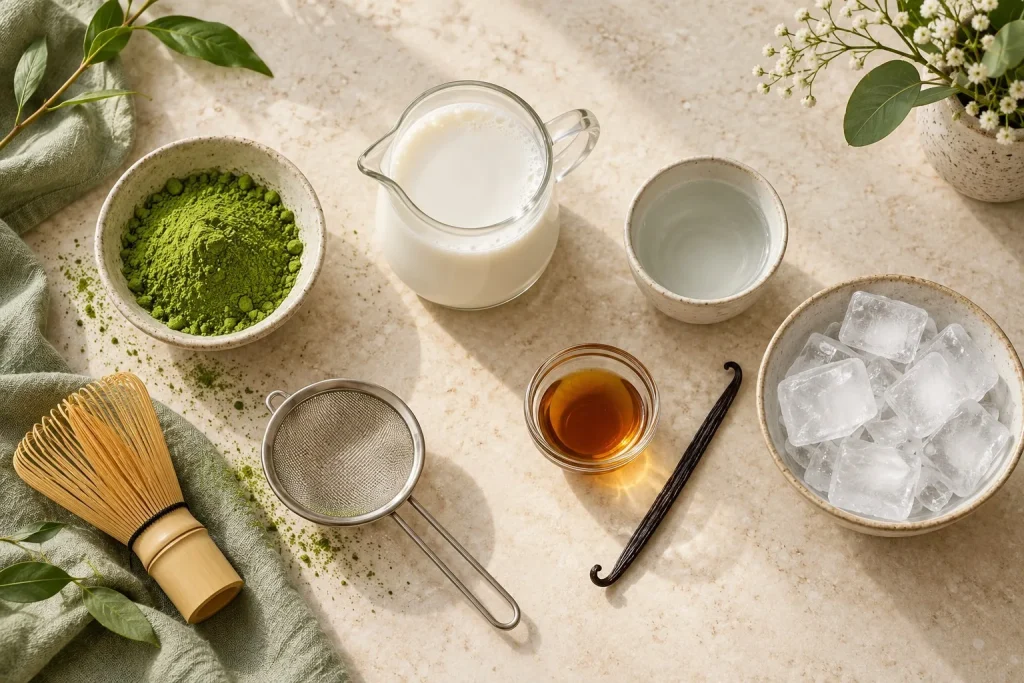
2 tbsp warm water
¼ tsp vanilla extract
Pour, then stir
Ingredients
- 1 level teaspoon pure, unsweetened matcha powder
- 2 US tablespoons warm water, approximately 30 mL
- ¾ US cup chilled, unsweetened coconut milk beverage, approximately 180 mL
- ¼ teaspoon food-grade vanilla extract
- Optional: 1–2 teaspoons maple syrup, added to taste
- Ice to fill the serving glass while leaving room for the liquids
Use the matcha maker’s water-temperature guidance. Keep the teaspoon measure for the powder; its gram weight varies with the product and how the spoon is filled.
How to make it
- Sift the tea. Measure the matcha into a small heat-safe mixing bowl, passing it through a fine sieve to disperse dry clumps.
- Whisk the base. Add the measured warm water and whisk until the visible dry clumps disperse. Stir in the vanilla and, if using it, start with 1 teaspoon maple syrup. Let the tea cool until it is no longer hot before the iced assembly.
- Build the cold glass. Add ice to the serving glass, leaving room for the liquids. Measure and pour in the cold coconut milk beverage. An ordinary serving glass is for the cold assembly; prepare warm tea in the separate heat-safe bowl.
- Pour, stir and taste. Pour the cooled matcha over the coconut beverage. Stir thoroughly before drinking. Taste the mixed latte and, if desired, add the remaining teaspoon of maple syrup. Make and serve the drink when you are ready to enjoy it.
The starting drink is deliberately simple. Milk formulation, powder and sweetness preferences change the result; compare one change at a time. For the plain method, use the iced matcha latte guide. For another vanilla base, see our vanilla matcha latte.
5 small choices that make this latte easier to repeat
- Choose a drinking beverage. Begin with the unsweetened coconut milk beverage specified in the recipe. Canned coconut milk and coconut cream are different formats; substituting them changes the starting recipe. The milk-for-matcha guide explains how to compare formulations.
- Keep the tea unsweetened. Pure matcha lets you choose the maple syrup separately. A prepared sweetened latte mix changes that balance. Use the matcha powder guide to compare ingredient labels.
- Prepare tea before adding milk. A small bowl lets you see dry clumps while whisking. The glass is for assembly after cooling; stirring a spoon through the full iced drink is a different task.
- Measure the vanilla. Start with the written ¼ teaspoon of food-grade extract. A free pour makes a stronger vanilla addition hard to repeat. Keep the other ingredients steady when deciding whether you prefer more or less next time.
- Mix before judging sweetness. Layers can show the ingredients beautifully, but the stirred drink is what you will taste. Begin with no syrup or the lower optional amount, then decide whether to add the second teaspoon.
For persistent clumps or bitterness, work through the matcha preparation checks before buying another accessory.
4 useful Amazon picks for the matcha recipe
Start with the powder and preparation tools you need. A suitable bowl and glass you already own can do the rest.
As an Amazon Associate I earn from qualifying purchases. These are affiliate links.
The tea
Naoki Superior Blend matcha · 40 g
A pure matcha option the manufacturer markets for tea and lattes. Use this recipe’s measured teaspoon rather than replacing it with a sweetened latte mixture.
The mixing step
Jade Leaf bamboo whisk + scoop
A manual whisk for the tea-and-water step. This set includes the whisk and scoop; use your own mixing bowl and measure the powder with the recipe’s teaspoon.
The sifting step
OXO Good Grips 3-inch mini strainer
A fine-mesh tool for preparing clumpy powder before whisking. Check the opening against your bowl; sifting and mixing are separate jobs.
Optional cold-drink glass
Libbey Classic Can glasses · set of four, 16 oz
A clear serving option for the finished iced coconut matcha. This selected Classic 4 set contains four 16-ounce glasses. Prepare the warm tea in a separate heat-safe bowl, let it cool, then assemble the iced drink in the glass with room to stir.
Check the selected size, included pieces, seller and current listing details before buying. If you prefer a powered mixing tool, compare the whisk and frother options before adding both.
Product details: Naoki Superior Blend · Jade Leaf whisk and scoop · OXO mini strainer · Libbey Classic Can set. These links support the food recipe; this article does not recommend an MSM supplement.
Keep exploring matcha flavors
- Vanilla matcha latte: another way to build a vanilla base.
- Banana matcha latte: fruit blended into the milk or made into a separate topping.
- 10 matcha latte flavor ideas: small food additions to compare.
Browse the recipe collection or return to matcha basics for preparation guides.
Quick answers
12 MSM and matcha questions answered
Open a question for a short answer. The measured drink idea above contains no MSM.
Is MSM the same as matcha?
No. MSM is methylsulfonylmethane, sold as a dietary supplement. Matcha is powdered green tea. A matcha-flavored supplement and a bag of plain matcha can contain very different ingredients.
Does MSM in matcha improve skin, hair or nails?
The evidence reviewed here does not establish those benefits for a homemade MSM-matcha drink. A testimonial, product name or study of another formula cannot demonstrate what adding MSM to your own latte will do.
How much MSM should I add to matcha?
This article does not recommend an MSM dose. A scoop is not a standard measure across products. Ask a qualified healthcare professional about the exact supplement and your circumstances, then follow the applicable product directions.
Can I use MSM capsules instead of powder?
Do not assume capsules can be opened and used as a drink ingredient. Check the product instructions and ask the manufacturer or pharmacist before changing how you take a supplement.
Is MSM in hot matcha better than in iced matcha?
No preferred temperature for this combination is established here. A raw ingredient’s heat-stability claim does not automatically apply to a finished supplement with other ingredients. Use its own preparation instructions.
Do I need vitamin C with MSM?
The reviewed NOW pure-MSM directions do not require it, and the sources reviewed do not establish that adding vitamin C to matcha improves MSM absorption. Choose citrus for flavor rather than as a presumed supplement activator.
Can MSM cause digestive upset or a rash?
NCCIH lists digestive upset, allergic reactions and skin rashes among reported MSM side effects. If you think you are having a reaction, stop using the product and seek medical advice; severe allergic symptoms need urgent help.
Can I drink an MSM matcha latte every day?
A daily habit does not establish safety or benefit. Ask a clinician or pharmacist about the specific supplement, your medicines and other products you take. Consider the caffeine in the complete drink as well.
Is vanilla coconut matcha caffeine-free?
No. Matcha contains caffeine. The amount depends on the tea and how much powder you use. Coconut beverage, ice or an added supplement does not remove it; this recipe idea has no verified caffeine calculation.
Can I make the latte without MSM?
Yes. The recipe idea on this page contains no MSM: just matcha, water, coconut milk beverage, vanilla, ice and optional maple syrup. The supplement discussion is separate from its food ingredients.
Can I use canned coconut milk or oat milk?
The starting idea calls for an unsweetened coconut milk beverage from a drinking carton. Canned coconut milk changes the richness and consistency. Oat milk is another possible swap; formulations vary, so adjust sweetness after stirring.
Why is my iced matcha clumpy or separated?
Sift the tea, whisk it with the measured water before adding milk, and stir the finished latte. Matcha is ground leaf and can settle. See our matcha troubleshooting guide for more preparation checks.
Sources and further reading
Product-label and preparation references: NOW MSM powder · Kala OptiMSM Matcha · Golden Tree Matcha Hair Latte · Bergstrom ingredient FAQ · Balchem OptiMSM information · Sunfood smoothie example. Manufacturer directions support the named products; their marketing is not independent clinical evidence.
Article updated October 22, 2026. Medical references and product/preparation sources were checked for this guide; product formulas and listings can change. This article provides general information rather than individualized medical advice.
KEEP EXPLORING