MATCHA GUIDES
Matcha-to-Water Ratio
For Ippodo-style classic tea, use 2 g matcha with 60 mL water. Its latte method uses 3 g with 100 mL water, then adds 100 mL milk. Keep the tea base and the finished drink separate.
By Anton Babich · Updated
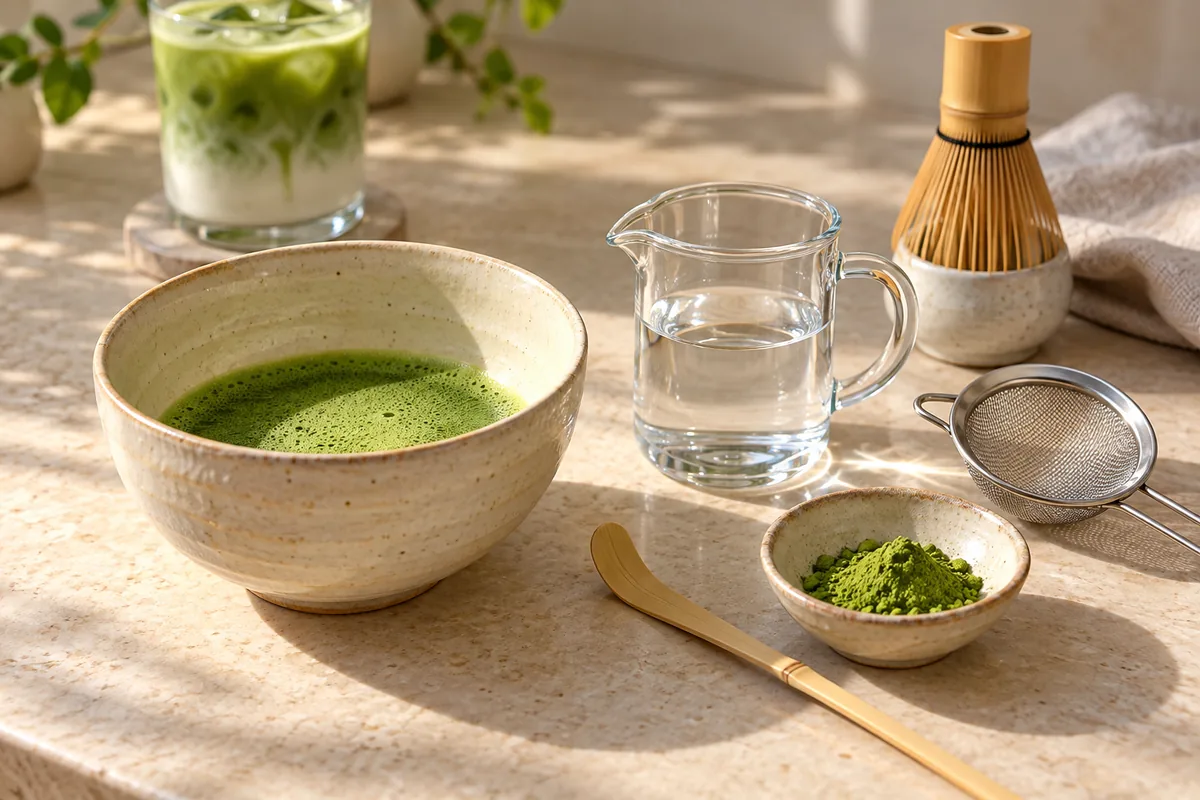
editorial illustration; generic tools, separate from the products discussed.
Drinks / Recipes / Cocktails & Mocktails / Gear / Learn
Ratio chart / Understand the units / Latte ratios / Make two servings / Measuring tools / Questions
Source-based guide. Ippodo’s preparation methods checked October 27, 2026. Follow your own tea maker’s directions when they differ.
How much water do you use for matcha?
These four Ippodo methods use preparation water at 80°C / 176°F. Milk is an additional ingredient in the latte, not part of the water measurement.
2 g + 60 mL
Classic matcha
Powder plus water for usucha, a small bowl of tea without milk.
3 g + 100 mL
Latte tea base
Powder plus water, followed by 100 mL milk. Serve hot or over cold milk and ice.
4 g + 30 mL
Thick matcha
Powder plus water for koicha. Mix slowly rather than whisking up foam.
On a small screen, swipe the chart sideways to compare.
| Style | Matcha powder | Preparation water | Milk added afterwards |
|---|---|---|---|
| Classic tea / usucha | 2 g | 60 mL | None |
| Iced latte | 3 g | 100 mL | 100 mL cold, plus ice |
| Hot latte | 3 g | 100 mL | 100 mL warm or foamed |
| Thick tea / koicha | 4 g | 30 mL | None |
Prepare the tea first. Sift the powder. Ippodo whisks classic tea and latte bases vigorously for 15 seconds; for koicha, it mixes slowly for 15 seconds. Each latte adds 100 mL milk to 100 mL preparation water: 200 mL of measured liquid before foam or melting ice changes the volume.
Save the one-page reference with measurements and sources. PDF · 66 KB.
Preparation sources: Ippodo classic matcha · iced latte · hot latte · koicha. These are named maker references, not one universal recipe for every matcha powder.
MatchaMixology · matchamixology.com/matcha-water-ratio/
What does a 1:30 matcha ratio mean?
Write down the units: 1 g powder to 30 mL water. The classic reference uses twice that amount, 2 g with 60 mL water. This describes preparation water; milk, syrup and ice are recorded separately.
Water per gram = water in mL ÷ powder in g
60 mL ÷ 2 g = 30 mL/g
A teaspoon measures volume, while a gram measures weight. Different powders and filling methods can give different weights in the same spoon. For a gram-based recipe, weigh the tea; if using a spoon, follow the maker’s approximate measure for that powder.
Matcha-to-water ratio for a latte
A latte has two measurements to keep track of: the tea base and the added milk. In Ippodo’s hot and iced methods above, the base uses 3 g powder with 100 mL water. Each then adds 100 mL milk.
Ippodo’s latte liquid portions
For an iced version, pour the prepared tea over cold milk and ice. For a warm version, add warm or foamed milk. Follow our complete iced matcha latte or hot matcha latte recipe for the method.
A strawberry latte or another flavored recipe may use a different balance. Keep that recipe’s powder, water, milk and fruit quantities together. Adding more milk changes the finished drink even when the tea-base ratio stays the same.
How to make two servings
Double every measured ingredient in the chosen method. These are calculated doubles of the one-serving references, not separately tested manufacturer recipes:
- Classic tea: 4 g matcha + 120 mL water.
- Hot or iced latte: 6 g matcha + 200 mL water, then 200 mL milk. For iced lattes, divide between two glasses prepared with ice.
- Thick koicha: 8 g matcha + 60 mL water, divided into two servings.
Use two preparation batches if your bowl lacks whisking room. For a flavored recipe, double its measured additions too; ice changes dilution as it melts.
Make one cup you can repeat
- Pick one complete method. Choose tea, latte or koicha and keep its measurements together.
- Measure and sift the powder. Put the vessel on the scale before using tare, then measure the tea portion.
- Measure the water and check its temperature. Follow your tea’s guidance and the measuring tool’s directions.
- Prepare the base, then finish the drink. Use the chosen method’s mixing directions before adding measured milk or other ingredients.
For the mixing decision, compare a bamboo whisk and a handheld frother. A different tool still needs a suitable vessel and its own operating instructions.
Adjust one part of the drink at a time
- Too intense: first check whether your powder and water match the chosen method, then try a small, recorded water adjustment.
- Weak after adding milk: check the complete milk and ice portions before changing the tea quantity.
- Clumpy: check sifting and mixing before treating it as a ratio problem.
If the cup tastes bitter, compare the powder, temperature and preparation with your starting method. Work through the matcha troubleshooting guide while changing one variable at a time.
Tools for weighing tea and measuring liquids
Reuse suitable tools you already own. If a measurement is the missing piece, these two options cover different jobs.
As an Amazon Associate I earn from qualifying purchases. These are affiliate links. Check the selected size, seller and current listing details before ordering.
OXO 6-lb Precision Scale with Timer
For weighing powder. OXO specifies measurements from 0.5 g upwards in 0.1 g displayed intervals, with a tare function.
View the OXO scale on AmazonOXO 1-Cup Angled Measuring Cup
For measured liquid portions, with cup, ounce and milliliter markings. Select the single 1-cup version. Use a smaller graduated measure when a small quantity falls between its marks.
View the OXO measure on Amazon
Manufacturer details: OXO scale · OXO measuring cup. Check heat-use and care directions. Use a suitable thermometer or temperature-controlled kettle you already own for the water-temperature step.
Matcha-to-water ratio questions
How much water do I use for 2 g of matcha?
Ippodo’s classic usucha method uses 60 mL water for 2 g matcha, at 80°C / 176°F. This is a small bowl of tea without milk; follow your own maker’s instructions when they differ.
How much water do I use for 3 g of matcha in a latte?
The Ippodo latte references use 100 mL water for the 3 g tea base, then add 100 mL milk. Another complete latte recipe may use a different balance. Keep its quantities together.
Does 1:30 mean 30 mL of finished latte?
Here it means 1 g matcha to 30 mL preparation water. Added milk, syrups and fruit are separate quantities, and ice changes the drink as it melts.
Can I measure matcha with a teaspoon?
You can follow a maker’s approximate spoon measure for its powder. A teaspoon is a volume measure, so it does not provide one exact gram weight across every powder and filling method. Use a suitable scale for a gram-based recipe.
Should I use boiling water for matcha?
The four Ippodo references here use 80°C / 176°F preparation water. Check the temperature guidance for your own tea before adding the water.
Can I double a matcha latte?
Yes: double the powder, water, milk and other measured additions in the same recipe. Leave enough mixing and serving room, or prepare the tea in two batches.
Choose the rest of your latte
- Choose matcha powder for lattes — Compare ingredients, pack sizes and intended use.
- Choose milk for matcha — Compare dairy and plant-based options before changing the tea portion.
- Compare matcha starter kits — Check the contents against the tools you still need.
- Store your matcha powder — Follow the handling guidance for your tea and packaging.
For the wider preparation routine, visit Matcha Basics or follow the bamboo whisk cleaning guide after making your cup.
KEEP EXPLORING