THE MATCHA TOOLKIT
Matcha Sifters: What to Buy and How to Use One
A matcha sifter breaks up dry clumps before you whisk. Compare three useful options, choose a size that fits your bowl, and learn a cleaner way to prepare your next drink.
By Anton Babich · Product details checked November 11, 2026
Quick choice
For a daily latte, start with a small fine-mesh sifter that fits your bowl. Jade Leaf offers a dedicated matcha tool; Ippodo adds a receiving bowl; OXO offers a multipurpose kitchen strainer. If you already own a suitable fine-mesh sieve, try that before buying another.
Affiliate disclosure: As an Amazon Associate I earn from qualifying purchases. Amazon buttons open affiliate product searches. Check the exact model, size, seller and current price; search results can include unrelated items. Manufacturer links are not affiliate links.
This is a research-based buying guide, not a hands-on product test. We compare manufacturer specifications and intended uses; we have not tested these tools side by side. See our editorial standards.
Compare sifters · Buying checklist · How to sift · Questions
Matcha sifter comparison: three options
| Option | Why consider it? | Check first |
|---|---|---|
| Jade Leaf Matcha Tea Sifter | A dedicated stainless-steel matcha tool. | Basket size and care directions. |
| Ippodo Chakoshi | Dedicated sifter with a receiving bowl. | Whether you need the extra bowl. |
| OXO Good Grips 3-inch Mini Strainer | A multipurpose fine-mesh kitchen tool. | Fit over your bowl; not a matcha-specific performance claim. |
Jade Leaf Matcha Tea Sifter
Consider it for: a dedicated tool for everyday matcha.
Jade Leaf describes this as a stainless-steel tea sifter intended to break up matcha clumps. It is a straightforward option if you want a tool specifically sold for this task. Confirm the basket dimensions and cleaning instructions before ordering; do not assume all listings with the brand name contain the same accessories.
Ippodo Tea Strainer (Chakoshi)
Consider it for: a dedicated sifter with a matching receiving bowl.
Ippodo lists stainless-steel construction and includes a bowl to catch powder when the strainer is set down. Its preparation directions call for a dry strainer and a spoon or tea scoop to move matcha through the mesh. The extra bowl may suit a permanent tea station; it also means another piece to store.
Direct manufacturer link; not an affiliate link.
OXO Good Grips 3-inch Mini Strainer
Consider it for: a small strainer that can also handle other kitchen tasks.
OXO specifies fine mesh, stainless-steel construction, a balancing loop, a non-slip handle and dishwasher-safe care. The maker lists uses such as dusting powdered sugar and straining citrus juice. This is a general-purpose alternative, not a manufacturer-verified matcha specialist; compare its fit and mesh with your needs.
Do you need a matcha sifter?
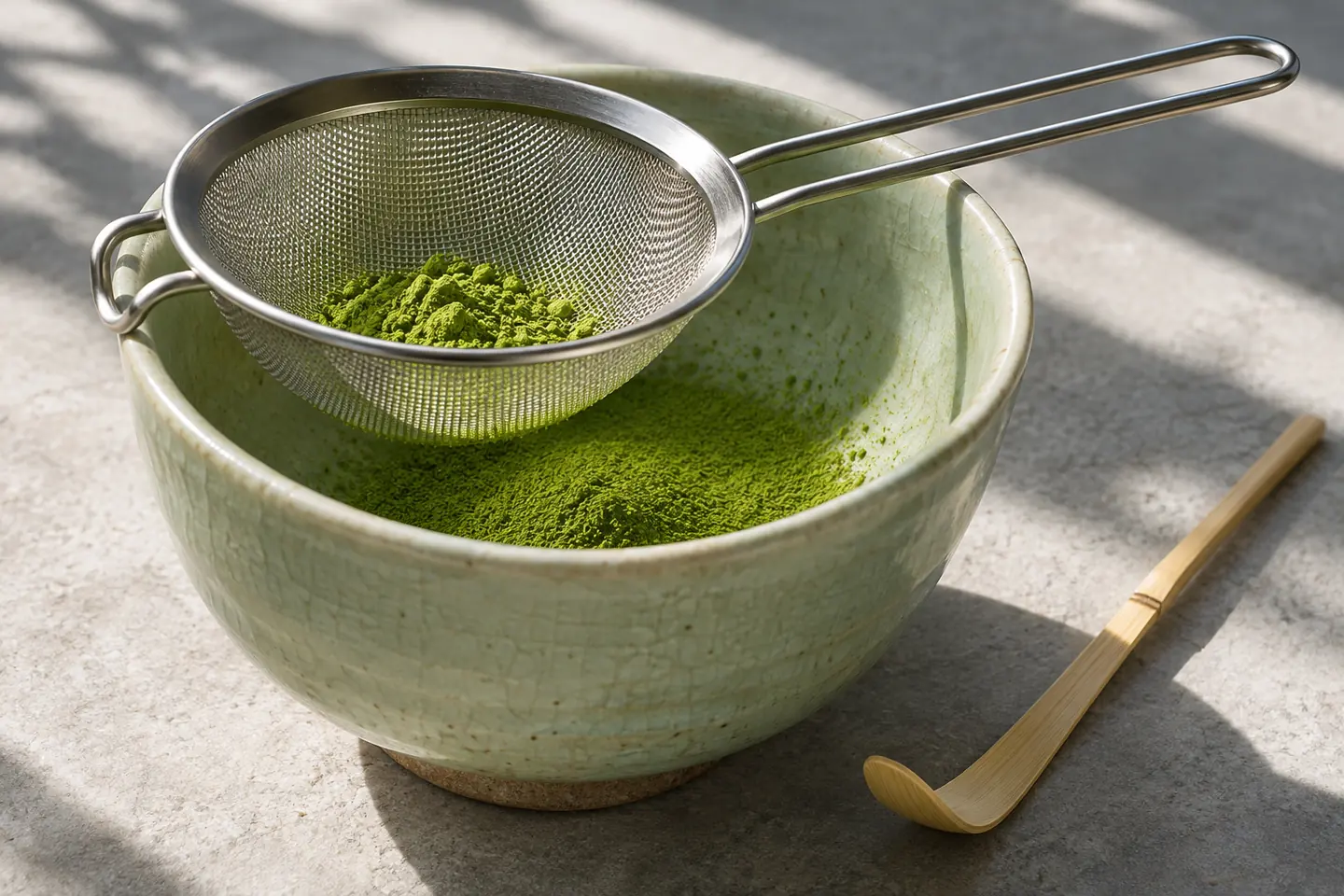
A matcha sifter breaks up dry clumps before water is added. It is a small preparation tool, not a brewing filter: the powder goes through the mesh into your bowl, and you then whisk that powder with water.
If your matcha repeatedly forms little dry pockets, sifting is a useful step to add before changing your recipe or buying a more powerful frother. A sifter will not make stale tea fresh or correct an overly strong drink. For bitterness, also check your powder, temperature and preparation method.
What to look for when buying a matcha sifter
Fine, intact mesh: look for a sieve described for sifting matcha or fine powders. Large perforations in a loose-leaf tea infuser are a different design. Check that the mesh is firmly attached and has no gaps at the rim.
A manageable basket: a small basket makes it easier to direct a single portion into a bowl. Check that its opening and handle work with your vessel. Our matcha bowl guide explains bowl shape, whisking room and pouring spouts. A sifter should be comfortable to hold or rest securely; it should not teeter on the rim.
Simple cleaning: inspect the join between the mesh and frame, where residue can collect. Follow the manufacturer’s washing instructions, and choose a tool you can dry completely before its next use.
Useful extras: a receiving bowl can catch loose powder between uses. It is convenient, but a covered sifting tin is unnecessary if you only prepare one portion at a time. Buy for the routine you have.
Matcha sifter versus ordinary tea strainer
Some fine-mesh tea strainers work well for matcha. The name on the packet is less useful than the mesh, size and handling. A broad kitchen sieve can also break up clumps, but may scatter a small dose beyond a narrow bowl.
How to sift matcha without making a mess
1. Start dry. Set out a dry bowl, dry sifter and dry scoop or spoon. Keep the open tea container away from steam and splashes.
2. Measure your portion. Add the amount of powder your recipe calls for to the sifter. Use a suitable scale when following a gram-based recipe; a scoop is useful for transferring powder but is not a precise weight measurement.
3. Keep the sifter close to the bowl. Gently work the powder through with a spoon or tea scoop. Avoid flicking the mesh or tapping so hard that powder flies outside the bowl. Do not force the rim of the tool into the mesh.
4. Add water after sifting. Whisk the sifted powder with the measured water, then finish the drink. Start with our iced matcha latte recipe or warm matcha latte.
Troubleshooting powder that will not pass through
Powder sticks to the mesh: check for moisture before pressing harder. A damp mesh turns fine powder into a paste. Clean and thoroughly dry the tool before trying again.
Matcha escapes around the bowl: use a wider receiving vessel, reduce the height above it and sift a smaller amount at a time.
You still see clumps after mixing: check that all the dry powder was sifted and that you whisked it into water before adding the rest of the drink. A sifter helps with dry clumps; it does not replace mixing.
The mesh is bent or separating: replace a damaged tool rather than scraping more forcefully. Keep sharp implements away from fine mesh.
Build a setup you will actually use
Already shopping for a whisk? Our starter-kit comparison identifies sets that include a sifter. Avoid buying the same tool twice. For the rest of the setup, browse matcha kitchen tools.
Baking with matcha? A wider sieve may be easier for larger powder quantities. Pair it with our matcha powder for baking guide and follow the quantities in your chosen recipe.
Matcha sifter questions
Should I sift before or after adding water?
Before. You are breaking up dry powder clumps. Pushing a finished drink through a sieve is a different task and is not the method described here.
Can I use an electric frother instead?
A frother mixes the drink; a sifter prepares the dry powder. They do different jobs and can be used together. Read our whisk-versus-frother comparison. For a cold routine you can carry, see our matcha shaker bottle guide.
Should I sift the whole tin at once?
For a simple home routine, sift the portion you will use. Keep the remaining powder sealed and dry; see how to store matcha.
Does a more expensive sifter improve flavor?
A higher price does not establish better flavor. Compare construction, handling and care requirements, and choose one that makes the sifting step easy to repeat.
Sources and selection notes
We compared a dedicated standalone sifter, a sifter with a receiving bowl, and a multipurpose kitchen strainer. Product details come from the Jade Leaf, Ippodo and OXO manufacturer pages. Prices and availability can change; compare current listings before buying.