BUYING GUIDES · MATCHA TO GO
Matcha Shaker Guide: Choose a Bottle for Cold Matcha
A matcha shaker gives you a way to mix cold tea without setting out a bowl and whisk. Choose a full-size bottle for a whole iced drink, a mini shaker for a tea base, or a powered mixer if you prefer a button to hand shaking.
By Anton Babich · Product pages checked November 12, 2026.
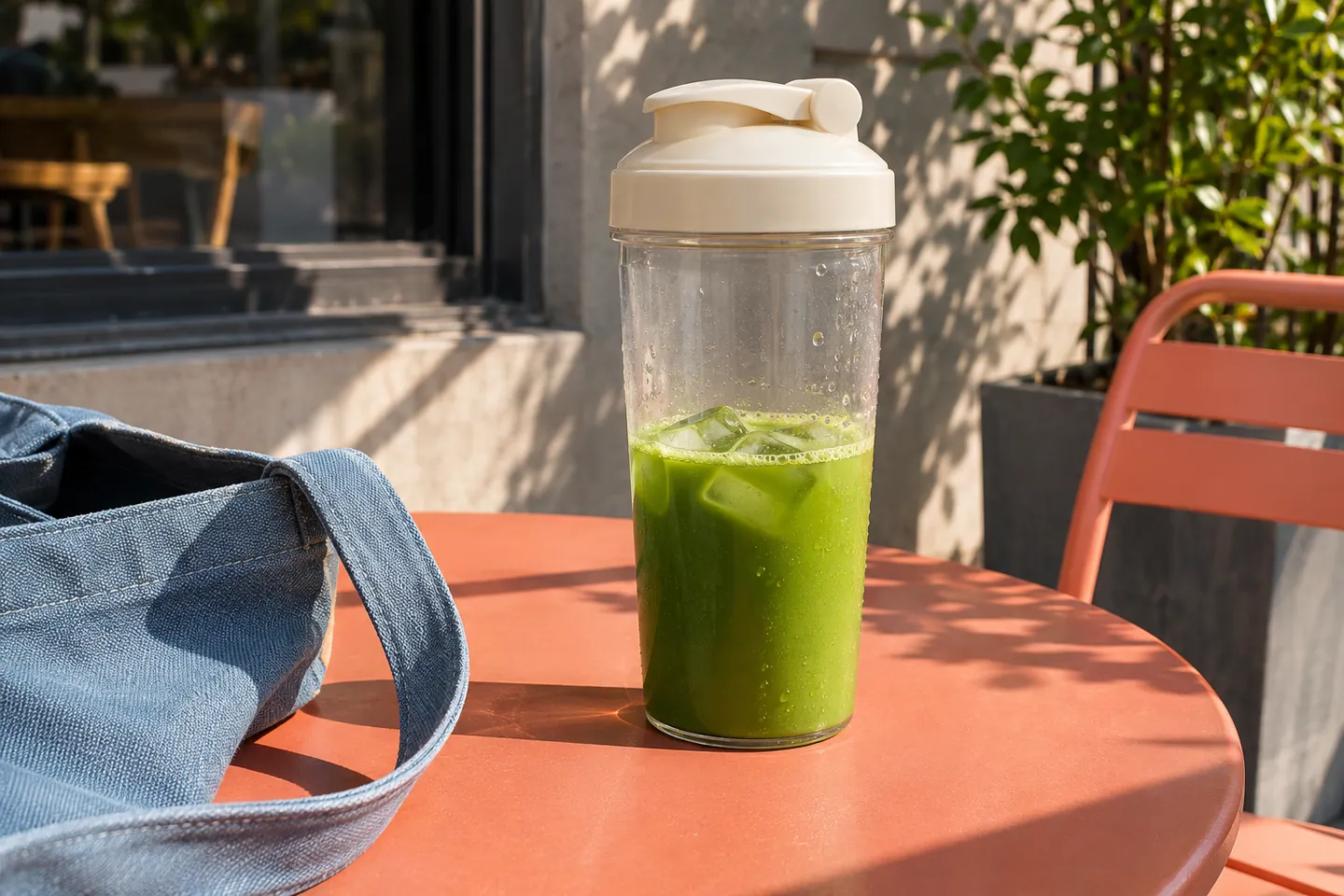
Editorial illustration of a cold matcha bottle; the pictured bottle is not a reviewed product.
Which matcha shaker should you choose?
- A whole cold latte: compare a full-size hand shaker, leaving room for the liquid to move.
- A small base to pour into another cup: consider a mini matcha shaker and confirm its usable volume.
- Mixing at the press of a button: compare a powered whisk bottle, including its charging and cleaning instructions.
Matcha shaker bottles at a glance
Start with the drink you want to carry. A bottle’s advertised capacity includes space you may need for ice and shaking; a small base mixer serves a different job from a complete latte bottle.
| Type | Useful for | Check before buying |
|---|---|---|
| Full-size hand shaker | A cold tea or latte mixed in one bottle | Usable fill level, closure and cleaning access |
| Mini matcha shaker | A cold tea base poured into a separate cup | Actual capacity and whether another vessel is needed |
| Powered mixer bottle | Electric whisking instead of hand shaking | Fill limits, charging and which parts can be washed |
Selection notes: these examples are based on manufacturer-listed designs and instructions, not hands-on bottle tests. Read our editorial standards.
As an Amazon Associate I earn from qualifying purchases. Amazon search links can show different products and sellers; check the exact model, included parts and current listing.
1. Full-size hand shaker: for a complete cold drink
A regular shaker is the first type to compare when you want tea, milk and ice in one container. Look for enough usable space for your recipe, rather than choosing only by the largest capacity number.
One example is the BlenderBottle Classic. The maker lists 20 oz, 28 oz and 45 oz versions, a rounded base, a wire mixing ball and measurement markings. Compare the smaller versions for one drink and check the selected size’s fill guidance. The Classic is not listed as insulated.
Our fit: someone who wants manual mixing and already has a way to keep a cold drink chilled. A flip cap must be fully secured before shaking. Check that any mixer part described in the listing is included.
Read the maker’s Classic specifications
2. Mini matcha shaker: for a base you pour into milk
A mini shaker makes sense when you want a small tea-mixing tool in your bag, then pour the base into a larger glass. It can also be useful at a desk where you already keep a cup.
Matcha.com’s Matcha Mini Shaker is described as a small bottle for mixing matcha with cold water on the go. Check its current usable volume before assuming it can hold a complete latte with milk and ice.
Our fit: a compact mixing routine with a separate serving cup. A smaller object is only convenient when its capacity and cleaning routine suit the way you make tea.
See the Matcha Mini Shaker at the maker
3. Powered mixer: an alternative to hand shaking
A powered bottle uses a motor and whisk to mix the drink. It adds charging and appliance-care requirements, so compare those details alongside the container size.
The Matcha Kari × Visp on-the-go mixer is a current example: its product page describes a portable electric mixer for matcha and identifies iced lattes as a use. Follow the appliance’s own directions for assembly, fill level and washable components.
Our fit: someone who values electric mixing enough to manage a battery and the extra parts. Amazon results may show other Visp versions or unrelated mixers; compare their individual specifications.
See the Matcha Kari × Visp mixer
Five checks before buying a shaker bottle for matcha
- Usable volume: add up the tea base, milk and ice you plan to use, then allow the movement space required by the bottle. A capacity label is not a suggested recipe fill level.
- Closure: choose a bottle intended for shaking. A lid that covers a drinking opening does not automatically make an ordinary travel tumbler suitable for this job.
- Cleaning access: make sure you can reach the inside and clean any removable mixing parts. Check the maker’s instructions before removing a gasket or other seal.
- Mixing system: identify whether the bottle uses hand agitation, a ball, an insert or an electric whisk. A loose-leaf tea filter alone does not tell you how a bottle handles powdered matcha.
- Care and replacement parts: compare the exact version’s washing rules and availability of replacement lids or seals. Powered mixers need their electrical parts treated according to the manual.
How to make cold matcha in a shaker
Use your tea maker’s serving size and cold-water directions, plus the bottle’s fill limits. This workflow is for cold, still liquids. For measured milk and tea portions, use our iced matcha latte recipe and prepare the base with cold water when using a hand shaker.
- Add cold water first. Measure the amount your tea directions recommend, leaving space for mixing.
- Add the matcha. If the powder is clumped, sift it first into a dry vessel. Our matcha sifter guide explains choosing a sieve that fits your setup.
- Fit the mixing part and secure the lid. Follow the bottle’s instructions and shake until the powder is evenly dispersed. A powered bottle follows its own mixing cycle.
- Finish the drink. Open the spout away from your face. Pour the base over cold milk and ice in a serving glass, or add the remaining cold ingredients only if the bottle has sufficient usable space.
Shaking disperses the tea; it does not make it permanently disappear into the water. Ippodo’s matcha packet guidance notes that settling happens and recommends cold water for bottle preparation. Gently remix a closed cold bottle before another sip when needed.
Keep hot and fizzy drinks out of sealed hand shakers
BlenderBottle warns against warm or hot liquids and carbonated drinks in its shakers. Use an open preparation vessel for our hot matcha latte. Assemble a sparkling matcha tonic in a glass rather than shaking the carbonated drink in a sealed bottle.
Shaker, bamboo whisk or electric frother?
Choose the preparation routine you enjoy. A shaker is useful for cold mixing and carrying a drink. A bowl and bamboo whisk give you an open vessel for whisking, while a separate electric frother adds a powered tool to your existing cup. Compare those routines in our matcha whisk versus frother guide. You may already own enough equipment for the drink you want.
Clumps, settling and cleaning
Powder is stuck at the bottom
Check the order: liquid first helps keep dry powder from packing onto the base. Sift obvious clumps and leave enough movement space. Increasing the amount in a nearly full bottle can make mixing harder.
Tea settles after the bottle stands
Settling is expected with matcha. Remix the cold drink when needed; a bottle label promising convenient mixing is not a promise that the tea will stay suspended indefinitely.
The lid or mixing parts hold residue
Rinse promptly, then wash according to the exact model’s care guide. Let cleaned parts dry before storage. BlenderBottle provides use and care instructions; powered mixers need their own manual. Keep milk drinks refrigerated as appropriate for the ingredients—an ordinary sealed shaker is not refrigeration.
Complete the bottle setup
Choose tea that suits the drink. Our matcha powder for lattes guide compares buying criteria and options. A small sifter is a useful add-on when your powder clumps; buy one that fits the preparation vessel you use.
Check each listing’s package size, seller and included items. These are separate products, not a complete bundle.
Matcha shaker questions
Can I use a protein shaker for matcha?
A shaker intended for cold drinks is an option for a cold matcha routine. Check its instructions, fill limits and included mixing parts. Do not assume every protein shaker has the same care or temperature limits.
Does a matcha shaker replace a sifter?
They do different jobs. A sifter breaks up dry clumps before mixing, while shaking agitates the powder in liquid. Use a sifter if clumps are a problem; the bottle alone does not guarantee a particular texture.
What size matcha shaker should I buy?
Choose around your drink’s liquid volume, ice and the space required for shaking. A mini base mixer and a complete latte bottle need different capacities. Read the selected model’s usable fill instructions before ordering.
Can I put matcha straight into cold milk?
Your result depends on the powder and mixing setup. Preparing a separate cold-water base lets you inspect it for dry pockets before adding milk. Start with the workflow above and adjust the finished latte to your taste.
Sources and selection notes
Product pages reviewed November 12, 2026. Features and availability can change. We selected these examples to show different mixing routines and have not measured their mixing performance, temperature retention or leak resistance.
- BlenderBottle Classic product specifications
- BlenderBottle use, cleaning and precautions
- Matcha Mini Shaker
- Matcha Kari × Visp portable mixer
- Ippodo matcha packets: cold-bottle preparation and settling
Keep exploring: matcha gifts · all buying guides · matcha recipes.