MATCHA GUIDES
How to Clean a Matcha Whisk: Rinse, Dry and Store
Clean a bamboo matcha whisk soon after making tea: rinse away the powder with water, check the delicate tips, then leave it in an open place to dry. The steps below focus on a bamboo chasen. Electric frothers and resin whisks have their own cleaning instructions, so keep the material in mind before choosing a method.
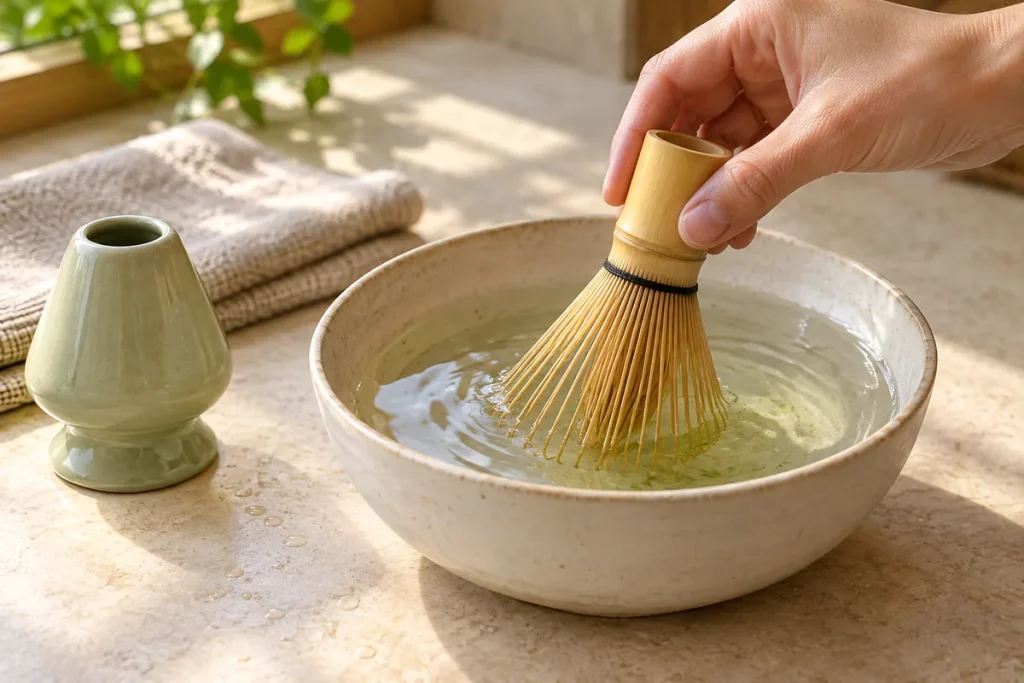
illustration of gently rinsing bamboo whisk tines.
Drinks / Recipes / Cocktails & Mocktails / Gear / Learn
Cleaning steps / Dry + store / When to replace / Questions
A closed display tube is not a drying spot for a wet whisk.
First, check which whisk you are cleaning
A bamboo chasen has fine, flexible tips that deserve gentle handling. Keep its routine separate from the care instructions for a motorized frother or a dismantlable resin whisk. The whisk-versus-frother guide explains their different preparation jobs.
Have a small bowl of fresh water ready when you make tea. It gives the whisk a rinse without needing to work around a tap. Musubi Kiln recommends a bowl method and cautions against accidentally knocking the whisk against a faucet.
How to clean a bamboo matcha whisk
- Rinse promptly. Once the tea is prepared, dip the bristles into fresh lukewarm water in a bowl. Gently move the whisk through the water to loosen matcha.
- Refresh the water if needed. If the rinse is visibly green or powder remains, use fresh water and repeat the gentle movement. Avoid dragging the tips hard against the bowl.
- Check for stuck powder. Look between the bristles. If residue remains, handle that area carefully rather than scrubbing or pulling the fine tips. Stop if you cannot remove it without damaging the whisk.
- Let excess water drain. Lift the whisk clear of the bowl, allowing droplets to fall back into it. Keep the rinse focused on the bristles rather than submerging the handle.
- Move it to an open drying spot. Set it on a compatible whisk holder if you use one, or follow the maker’s open-air drying directions. Leave it until fully dry before enclosed storage.
Ippodo’s chasen pointers recommend rinsing without soap soon after use and removing stuck powder gently. Musubi Kiln’s bamboo-care guidance also specifies water-only cleaning and avoiding the dishwasher.
Drying and storage are separate steps
Give the rinsed whisk an open-air place to dry, away from direct sunlight. Do not immediately return it to its tube. If you use a stand, check that the whisk rests on it gently and that the surrounding space is clear.
A compatible whisk holder supports the bristles as they dry. Musubi Kiln describes using the holder’s opening for the inner bristles and resting the outer bristles on its surface. For longer storage, its guidance says to make sure the chasen is completely dry before returning it to its case.
Make the routine easy to repeat: keep a rinse bowl near the preparation bowl, and leave a permanent space for the drying stand. An open spot you can see is easier to remember than a crowded cupboard.
Five habits worth changing
- Leaving the powder to dry on the whisk: rinse when you finish the tea so the next use does not start with old residue.
- Scrubbing hard: use gentle movements and inspection instead of treating the fine bamboo tips like a robust kitchen brush.
- Putting a wet whisk in its tube: complete open-air drying before choosing enclosed storage.
- Using it to mix the whole milky latte: whisk the water-and-matcha component first, then add milk separately. Ippodo’s guidance keeps the bamboo chasen with tea and water.
- Applying the stand’s care label to the whisk: a ceramic holder may have different cleaning permissions from the bamboo tool resting on it.
For mixing habits, Whisk Matcha’s care article cautions that rough pressure can bend or break tines. A light wrist movement is a better starting point than force against the bottom of the bowl.
When should you replace the chasen?
Inspect the tips rather than relying on one universal lifespan. Ippodo recommends replacement when the tips are broken. A stand can support shape, but it does not repair cracked or missing bamboo.
Brands may also give a replacement interval for their own products. Jade Leaf’s bamboo whisk-and-scoop listing advises replacing those bamboo items every three to six months with regular use. Treat that as the maker’s guidance for its items, alongside the actual condition of your tool.
If you see suspected mold or cannot identify remaining material on the whisk, set it aside and replace it rather than assuming a quick rinse makes it ready for your next drink.
Two relevant tools, when you need them
As an Amazon Associate I earn from qualifying purchases.
- Jade Leaf white porcelain holder: an option for an open drying setup. Check it against your whisk’s shape. See the Jade Leaf holder on Amazon.
- Jade Leaf bamboo whisk and scoop: a replacement option if your current chasen’s tips are damaged. See the whisk-and-scoop set on Amazon.
A new stand is not a substitute for rinsing and drying. Compare the supporting accessory in our whisk-holder guide before choosing one.
Common questions
Should I use soap on a bamboo matcha whisk?
The bamboo-care sources used here recommend water-only cleaning. Rinse promptly and handle any remaining powder gently. Check the instructions supplied with your exact whisk.
Can a bamboo chasen go in the dishwasher?
Musubi Kiln advises against it for a bamboo chasen. Do not carry over dishwasher instructions from a ceramic holder, resin tool or electric-frother attachment.
Can I dry it inside its plastic tube?
Let it dry in open air first. The display tube is an enclosed space; returning the whisk while wet skips the drying step. Check the maker’s instructions for later storage.
Do I have to use a whisk holder?
A holder supports the bristles during drying, but the important routine is to rinse and dry in a suitable open place. Follow the chasen maker’s directions if you do not have a compatible stand.
Should I soak the whisk before making matcha?
Ippodo suggests dipping its chasen in water for about one to two minutes before use to make the tips less brittle. Other makers specify their own preparation routine, so use the directions for the whisk you own.
Can I keep using a whisk with broken tips?
Replace a chasen with broken tips rather than using a holder to try to repair it. Inspect your tool as part of the routine and follow its maker’s replacement guidance.
Your next bowl, with a simpler cleanup
Make the measured iced matcha latte, keeping the bamboo whisk in the tea-and-water step. Explore the matcha basics hub for preparation guidance and the kitchen tools guide for a compact setup.
More Amazon options when tools need replacing
The holder and replacement whisk linked above are the simplest individual choices. If several tools are missing or worn, compare a bundle before buying each piece separately.
As an Amazon Associate I earn from qualifying purchases. These are affiliate links. Check the selected pack, bundle and current listing details before ordering.
Naoki Traditional Matcha Starter Set
A replacement-setup option listing a bamboo whisk, scoop and sifter. It does not supply your bowl or tea.
View on AmazonJade Leaf Complete Matcha Whisk Set
The linked set names a whisk, scoop, holder, sifter and guide. Review the selected bundle and use a holder only when it fits your whisk comfortably.
View on Amazon
Keep exploring matcha
- Compare starter kits — Check which tools each bundle actually includes.
- Store your matcha powder — Keep tea storage separate from the damp tool-drying area.
- Troubleshoot preparation — Check whether a mixing issue is technique or worn equipment.
KEEP EXPLORING