
MATCHA GUIDES
How to Make Matcha: A Beginner’s Guide
Learn how to make matcha with a measured plain-tea method, then choose a hot or iced latte. Start with the powder, water and mixing steps before changing milk or sweetener.
By Anton Babich · MatchaMixology
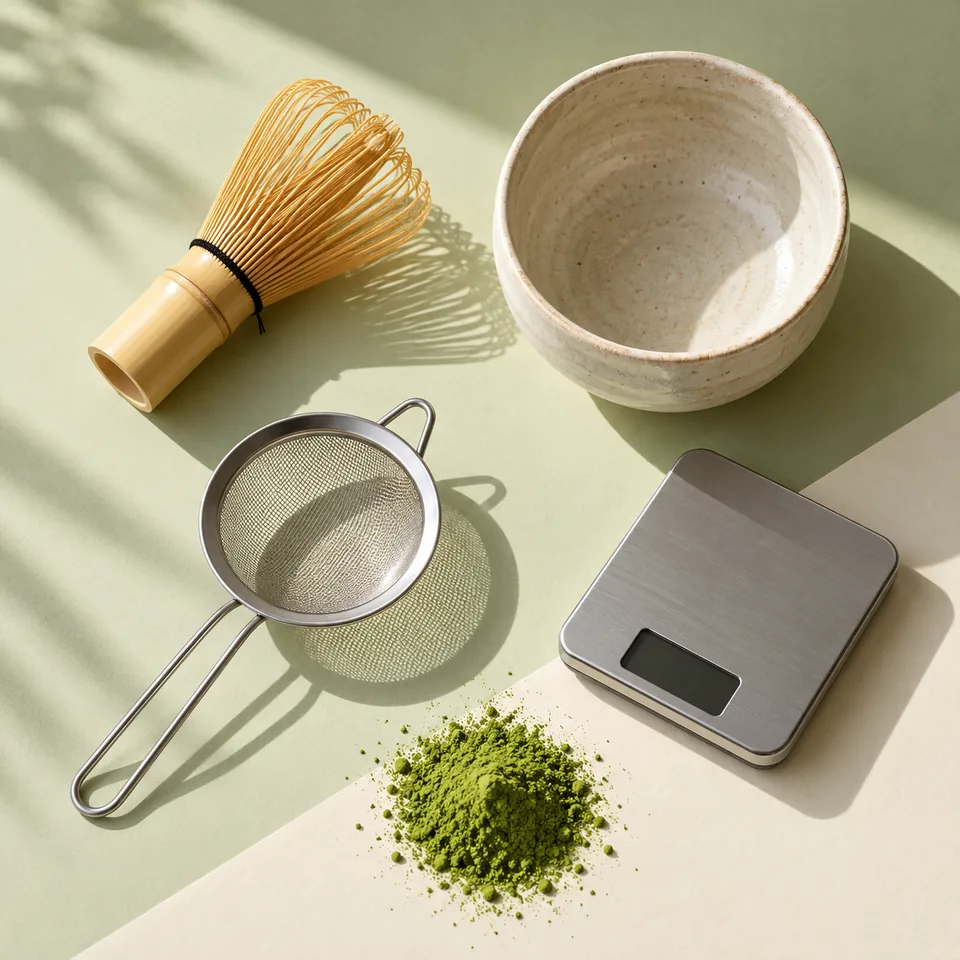
illustration of matcha preparation tools.
Drinks / Recipes / Cocktails & Mocktails / Gear / Learn
Start with one drink and a repeatable method. A small, reliable setup makes it easier to understand what the tea, milk, and sweetener each bring to your cup. This guide gathers preparation examples from tea maker Ippodo, along with a practical way to organize your own experiments.
Make plain matcha / Tea or latte? / Starter tools / Questions
Your first measured bowl
How to make plain matcha, step by step
For one serving: 2 g pure matcha and 60 mL water at 80°C / 176°F. Use a scale, small sieve, heat-safe bowl and matcha whisk. These proportions follow Ippodo’s classic matcha method.
- Measure and sift. Weigh 2 g pure matcha, then sift it into the bowl to break up clumps.
- Add warm water. Measure 60 mL water at 80°C / 176°F. Add it to the sifted tea.
- Whisk. Move the whisk briskly back and forth for about 15 seconds, until no dry powder pockets remain.
- Serve. Drink the plain tea soon after preparation. Stir again if it settles; milk and sweeteners belong to a separate drink build.
For a mug with milk, use the hot matcha latte recipe. For a cold version, use the iced matcha latte. Each gives a complete ingredient list.
Choose plain tea, a hot latte or an iced latte
| Drink | Pure matcha | Water for tea | Milk and serving |
|---|---|---|---|
| Plain classic matcha | 2 g | 60 mL at 80°C / 176°F | No milk in this method |
| Hot matcha latte | 3 g | 100 mL at 80°C / 176°F | 100 mL warm milk |
| Iced matcha latte | 3 g | 100 mL at 80°C / 176°F | 100 mL cold milk and the recipe’s measured ice |
These are reference recipes rather than one rule for every tea. The water-ratio chart explains the difference between the tea base and the whole drink. Keep one complete recipe together while you learn.
Choose the powder for your drink
Read the ingredient list before choosing a recipe. Unsweetened matcha and a prepared latte mixture can require different quantities; check for added sugar, milk powder, and flavorings. Record the package weight and the maker’s suggested preparation. Our guide to choosing matcha for lattes walks through the details to compare.
Choose a pack size you can work through while you are learning. At a serving size of 3 grams, a 30-gram package contains ten portions before handling losses. Divide the package price by its weight, then multiply by your serving size to compare portion costs.
Try a simple tea base first
Ippodo’s published usucha method uses 2 grams of sifted matcha and 60 milliliters of water at 80°C / 176°F. It recommends whisking for about 15 seconds with an M-shaped movement. These are that maker’s instructions for classic matcha; use your own tea’s directions when they differ. Read Ippodo’s classic matcha method.
Measure the powder and water, then make a note of the result. Preparing the tea separately gives you a reference before you add milk, fruit, or syrup. Keep the same powder quantity when comparing your next attempt.
Build an iced latte in separate steps
For an iced latte, Ippodo uses 3 grams of sifted matcha whisked with 100 milliliters of water at 80°C / 176°F, then poured over 100 milliliters of cold milk and ice. See its complete iced latte instructions.
Use this as a clearly documented reference. Record the milk you choose and any sweetener you add. When changing the balance, adjust one quantity at a time so you can repeat a version you enjoy. Explore our matcha drinks hub for your next direction.
Use and care for your mixing tool
A bamboo whisk works with a bowl that gives it room to move. Ippodo advises soaking the tips in water for one to two minutes before use, rinsing promptly without soap, and drying in open air. It recommends using the whisk with matcha and water, then adding milk separately for lattes. Read its whisk care guide.
If you use a powered frother, follow that model’s directions for permitted ingredients, temperature, and cleaning. Our whisk and frother guide helps you compare preparation routines before buying equipment.
Keep useful notes and store the tea carefully
Write down powder weight, water quantity and temperature, milk, and sweetener. For clumps, check whether you sifted and followed the mixing instructions. For a drink that seems weak, compare the recorded ratios before changing products. This creates a useful next experiment without needing to replace your whole setup.
Ippodo recommends an opaque, tightly sealed container stored in a cupboard away from strong odors, sunlight, and heat. Follow the storage and date instructions on your own package. Read its storage guidance.
Check a bitter or clumpy cup
Before replacing your tea or adding more syrup, compare the powder, water temperature, mixing step and drink proportions. Our five matcha preparation mistakes to check gives you a short troubleshooting sequence. Change one variable at a time so the next cup tells you something useful.
Choose your next experiment
Once you have a reference cup, choose one new addition. Our banana matcha latte article explores banana milk and a separate banana cream topping. You can also explore recipe ideas or use the gear buying guide to plan a setup around the drinks you actually want to make.
Curious about MSM in matcha? Read MSM powder in drinks: what to check before mixing with matcha for a comparison of supplement labels, matcha flavoring and ready-made latte blends.
Finish with a simple care routine.
Follow how to clean a matcha whisk for a gentle water rinse, open-air drying and storage. If you need a stand, the whisk-holder guide explains fit and material choices.
Store the tea and measure your next cup
The matcha storage guide compares maker-specific cupboard and fridge advice. Use the matcha-to-water ratio chart to choose a straight-tea or latte starting point, then compare starter kits if you need equipment.
Ingredients and tools for your next cup
As an Amazon Associate I earn from qualifying purchases.
Compare the products that fit your preparation. Start with suitable tools and ingredients you already own.
Naoki Superior Blend, 40 g
Pure, unsweetened matcha for a weighed tea portion. The plain-tea method uses 2 g, while the latte references use 3 g. A sweetened latte mix needs its own instructions.
Jade Leaf bamboo whisk and scoop
A two-piece set for preparing the tea base in a separate bowl. It contains the whisk and scoop; use a scale for the stated gram portion.
OXO Good Grips 3-inch Mini Strainer
A small sieve for breaking up matcha clumps before whisking. Hold it over the preparation bowl, then whisk the sifted powder with water.
OXO 1-cup angled measuring cup
A cup with ounce and milliliter markings for measuring the water and milk in your chosen drink. Use a smaller measure for small syrup additions.
OXO Precision Scale with Timer
A small-portion weighing option. The maker lists readings from 0.5 g in 0.1 g increments; display resolution is not a claim of exact accuracy.
Califia Farms Oat Barista Blend
An oat milk option for the hot and iced latte references. The linked Amazon listing is a case of six 32 oz cartons; check the quantity before buying.
Beginner matcha questions
What do I need to make matcha at home?
Start with pure matcha, water, a way to weigh the powder and measure water, a heat-safe preparation bowl, a small sieve and a suitable whisk. Choose milk and a serving glass or mug for the drink you actually want to make.
How much matcha should a beginner use?
The plain-tea method above uses 2 g with 60 mL water. The hot and iced latte references use 3 g with 100 mL water before milk is added. Use the amount written for your chosen recipe rather than treating every serving as identical.
Should I use boiling water?
The reference methods here use water at 80°C / 176°F. Follow your tea maker’s directions when they differ, and measure temperature rather than assuming every freshly boiled kettle has cooled by the same amount.
Why is my matcha clumpy?
Check whether you sifted the powder and whisked it with water before adding milk. Dry powder can hide in a finished latte. The preparation mistakes guide gives more checks.
Do I need ceremonial-grade matcha for a latte?
Choose pure matcha that suits the drink and your budget. A grade label alone does not tell you every detail of flavor or preparation. The powder guide explains ingredient and pack-size comparisons.
What should I try after plain matcha?
Use the hot latte or iced latte first. Then choose a vanilla latte, lavender latte or a sparkling matcha tonic with its own measured method.
KEEP EXPLORING